What a digital detox actually means
A digital detox is an intentional period in which you reduce or step away from digital devices and online platforms - usually phones, social media, streaming, news feeds, and games. The word "detox" is a metaphor rather than a medical term. There is no clinical procedure involved. What it describes is a structured reset: a stretch of time where you decide in advance how the screen fits into your life, instead of letting it decide for you.
That structure is the important part. Simply wishing you used your phone less rarely changes much, because the apps you use most are specifically designed to pull you back. A detox gives you a defined boundary - an afternoon, a day, a week, or a set of recurring rules - that makes the decision once instead of a hundred times a day.
Detoxes can look very different depending on the person. Someone might delete one distracting app for a month. Someone else might leave their phone in a drawer for a full weekend, or take a longer break from all non-essential screens. The common thread is intention: you choose the terms.
Why people take breaks from their devices
People come to digital detoxes for many reasons, and the honest answer is that the reasons vary. Common motivations include:
- Attention. A feeling that the day disappears into small, frequent checks - the "just five minutes" that becomes an hour.
- Sleep. Late-night scrolling that pushes bedtime later, or that keeps the mind alert when it is time to wind down.
- Presence. Wanting to be more available to the people and the work directly in front of them.
- Mood and comparison. The quiet discomfort that can follow a long stretch on social feeds.
- Reclaimed time. Curiosity about what the hours spent on screens could be spent on instead.
None of these motivations require you to believe technology is inherently bad. They simply reflect a growing awareness that attention is finite, and that where it goes shapes the quality of a day. Public health bodies such as the World Health Organization and the NHS publish general guidance on healthy screen use and digital wellbeing, which is a useful backdrop for thinking about your own habits - though individual needs differ.
A digital detox is not the same as abandoning technology
This is the most common misunderstanding. A detox is not a rejection of technology, and it is not a permanent unplugging. Phones, maps, messages, banking, cameras, and the ability to reach family are genuinely useful. The goal is to move from compulsive use to chosen use.
Think of it the way you might think about food. A planned break from a certain type of eating is not a declaration that food is the enemy. It is a way to notice your defaults and rebuild a healthier relationship with something you still need. The same logic applies here: you are not trying to live without your devices - you are trying to live with them on better terms.
The aim is not a life with no screens. It is a life where the screens you use are the ones you actually chose.
Potential benefits
Detoxes are not a cure for anything, and outcomes differ from person to person. With that caveat, people commonly report a few experiences during and after a successful break:
- More perceived time and less of a "where did the day go" feeling.
- Easier wind-down in the evening, and a bedtime that is set by choice rather than by one more video.
- Improved ability to concentrate on a single task for longer stretches.
- A clearer sense of which digital habits were genuinely valuable and which were merely automatic.
It is worth saying plainly: a detox is not a treatment for a mental health condition. If screen use is tangled up with persistent low mood, anxiety, or sleep problems, a break may help you see the pattern more clearly, but it is not a substitute for support from a qualified professional. For general guidance on children's and teenagers' screen use, organisations such as the American Academy of Pediatrics publish family-oriented recommendations.
Limitations and things to watch for
A detox is a tool, not a personality. A few honest limitations:
- The rebound. A very strict detox can be followed by a return to old habits. A gentler, more sustainable change often lasts longer than a dramatic one.
- Not the whole picture. Some of the "problem" is not personal willpower but product design. Boundaries and environment matter as much as discipline.
- One-off effects. A single weekend away from your phone is a nice reset, but lasting change tends to come from small rules you keep.
- Individual variation. What feels restorative for one person can feel isolating for another. Tune it to your life.
Practical ways to get started
You do not need a retreat or a special week to begin. Start small and specific:
- Pick one honest target. For example: "No phone for the first 30 minutes of the day," or "No phone at the dinner table."
- Make it physical. The single most effective step is distance. Charge the phone outside the bedroom, or leave it in another room while you work.
- Turn off non-human notifications. Keep calls and messages from real people; mute the rest.
- Replace, don't just remove. A detox works better when there is something to do instead - a book, a walk, a conversation, a hands-on task.
- Give it a defined length. A day, a weekend, or a week. A finish line makes it easier to start.
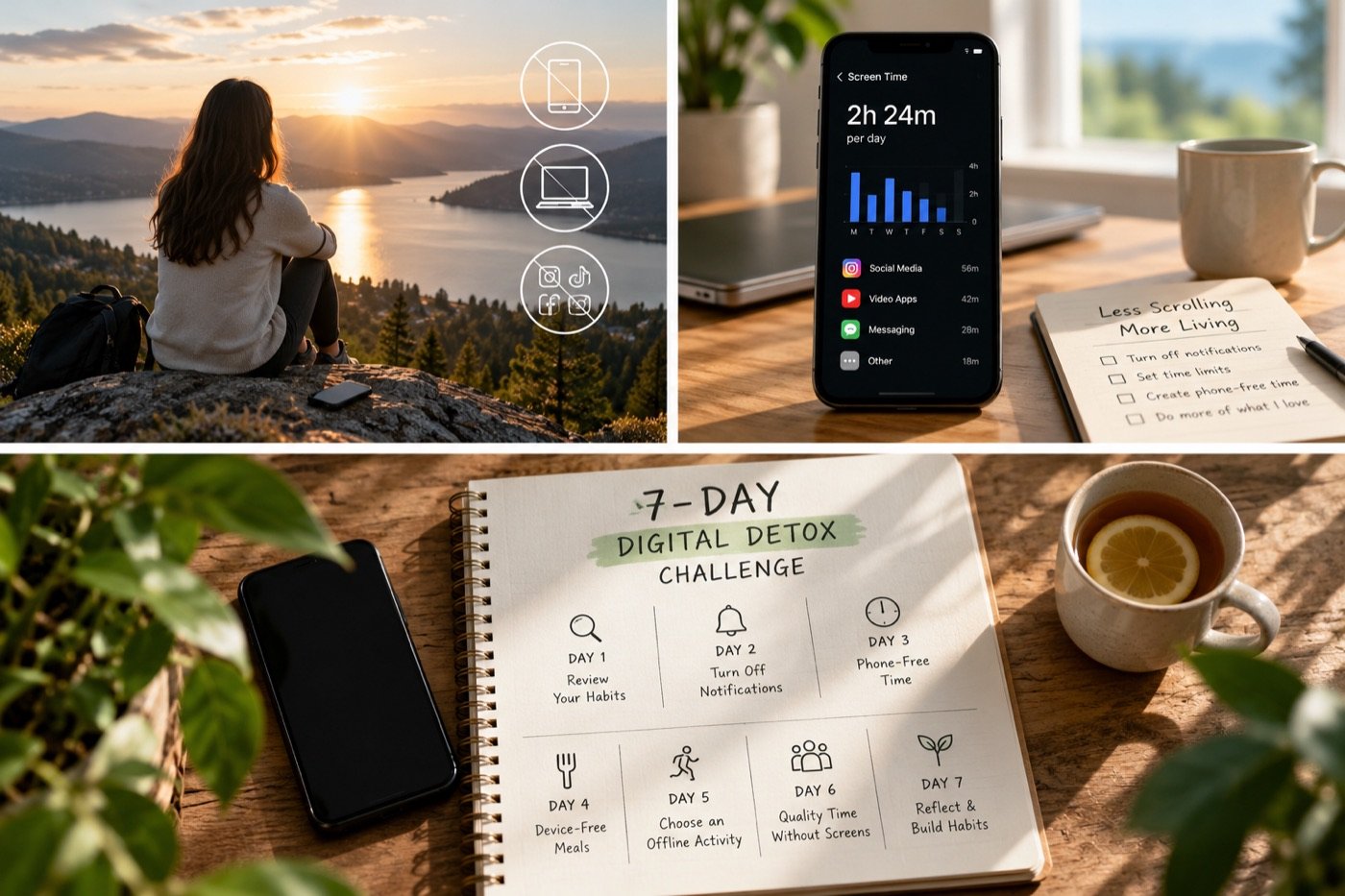
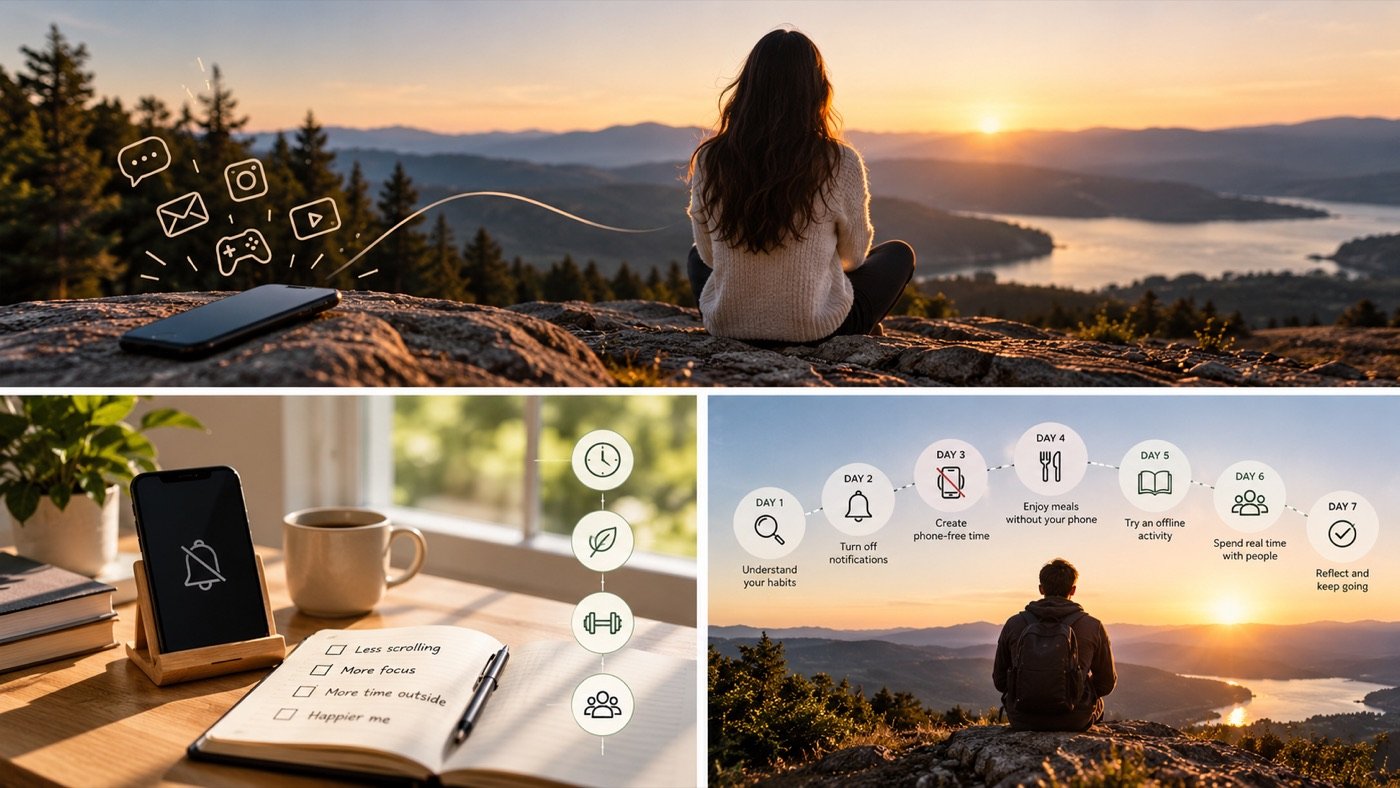
If you want structure, our 7-day digital detox challenge walks through one small action per day, and how to reduce screen time covers the auditing and habit mechanics in more detail.
Frequently asked questions
How long should a digital detox last?
There is no single correct length. A few hours, a full day, a weekend, or a week are all reasonable. For most people, a shorter break that you actually complete is more useful than an ambitious one you abandon. Regular recurring breaks - like a phone-free evening each week - often matter more than a single long one.
Do I have to delete all my apps?
No. Deleting everything is one approach, but it is not required. Many people get more from simply removing an app from the home screen, logging out, or setting a firm time limit. The goal is reducing automatic use, not punishing yourself.
Will a digital detox fix my sleep or anxiety?
A detox is not a medical treatment, and it will not "fix" a health condition. It can help you notice how your habits interact with your sleep and mood, and it may make room for healthier routines. If you are struggling with persistent sleep or mental health concerns, please speak to a qualified healthcare professional.
Is a digital detox the same as going off-grid?
No. Going off-grid means cutting yourself off from networks entirely. A digital detox usually keeps the useful, deliberate parts of technology - calls, messages, maps - while reducing the endless, automatic parts.
What is the hardest part?
For most people, the first day. The pull of habit is strongest early on. If you can plan something engaging for the first few hours, the rest usually gets easier.
The takeaway
A digital detox is a deliberate, temporary break from screens, used to reset your defaults and rebuild a healthier relationship with technology. It is not about abandoning your devices or treating them as evil. It is about moving from use that happens to you toward use you chose on purpose. Start small, keep it realistic, and let the structure - not willpower alone - carry the change.